
Group 61
FREE DELIVERY FROM 29 EUR

Coffee Ratios at Home: A Simple Guide Without Scales

Most people don’t make coffee at home using scales, thermometers, and timers. And that’s perfectly normal. On a daily basis, we make coffee with whatever’s on hand-spoons, mugs, and experience. That’s exactly what this article is about: how to make good coffee at home without barista equipment, but with an understanding of proportions, strength, and flavor.

The focus will be on ground coffee, since that is what most households use.

Kafijas proporcijas mājās: vienkāršs ceļvedis bez svariem

A fundamental principle you should know

The strength of coffee is primarily determined by the ratio of coffee to water, not by how long the coffee sits in the cup or how dark it looks.

In simple terms:

  • more coffee + less water = stronger coffee
  • less coffee + more water = milder coffee

Everything else is just a matter of detail.

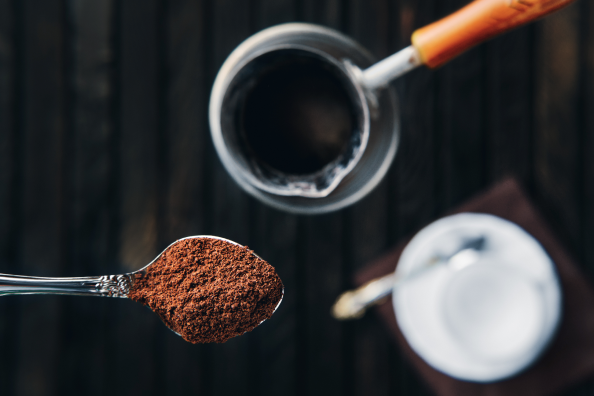
Measuring with spoons-the simplest way. How much is one teaspoon of coffee?

  • A level teaspoon-the coffee is leveled off with the edge of the spoon
  • A heaping teaspoon - coffee loosely scooped, not leveled off

Approximately:

  • 1 level teaspoon ≈ 2–2.5 g of ground coffee
  • 1 heaping teaspoon ≈ 3–3.5 g of ground coffee

The difference is significant, because two heaping teaspoons can be almost as much as three level teaspoons. This is how simple proportions are formed.

A standard mug is usually:

  • 200–250 ml mug

All of the proportions listed below are calculated per one such mug.

Coffee strength by teaspoons

Mild coffee

  • 2 level teaspoons
 OR
  • 1 heaping teaspoon

Taste:

  • light
  • a little bitterness
  • Suitable for drinking coffee with milk or on an empty stomach

Medium-strength coffee (most commonly used)

  • 3 level teaspoons
 OR
  • 2 heaping teaspoons

Taste:

  • balanced
  • a noticeable aroma
  • the safest option for guests and everyday use


This is the most common ratio in households.

Strong coffee

  • 4 level teaspoons
 OR
  • 3 heaping teaspoons

Taste:

  • intensive
  • a sense of bitterness
  • stronger effect

Cooking "by eye," but correctly

If you don't measure with spoons, you can use these guidelines as a reference:

  • For each cup of water-a layer of coffee that completely covers the bottom of the cup but does not form a mound
  • If the coffee seems “flat,” add a little more next time
  • If the coffee is strong and bitter, reduce the amount or the contact time

The key is consistency: use the same mug and spoon every time, and it will be easier to find the perfect combination for you.

Important: Strong coffee doesn't always mean "better." If the coffee becomes too bitter, the cause is often not the strength, but too long a contact time with the grounds.

What happens if coffee grounds are left in the cup?

Many people drink coffee with grounds at home, especially when brewing it in a mug or a pot. There’s nothing wrong with that, but you should know how it affects the taste.

If you drink coffee with grounds

  • Coffee continues to brew even after it has been made
  • Over time, it becomes stronger and more bitter
  • The final strokes are usually the most intense

This kind of coffee is better:

  • drink slowly, but not for too long
  • cook it a little softer than usual

In conclusion

You don't need a scale or professional equipment to make great coffee at home. All it takes is an understanding of proportions, a little attention to detail, and a willingness to find the option that works best for you.

Spoons, mugs, and experience work just as well as expensive equipment-if you know what you're doing. And that's exactly what makes enjoying coffee at home simple and enjoyable.

Kafijas ievārījums

Coffee Jam

Coffee jam is an amazing recipe that transforms the intense aroma of espresso into a sweet, fragrant, and creamy spread. It’s not difficult to make, you only need a few ingredients

Vairāk... »