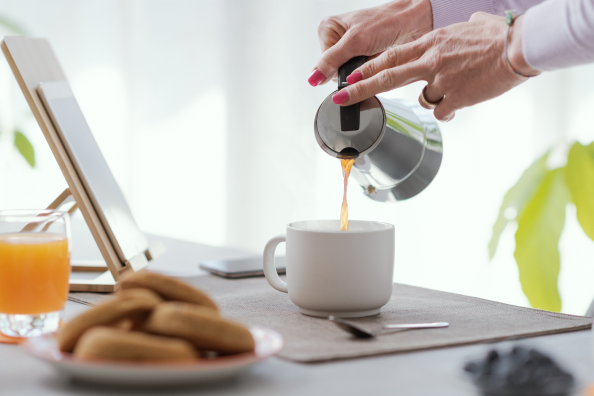

Coffee is a daily ritual that helps you wake up, clear your mind, and get ready for the day. But a cup of coffee doesn’t always turn out perfect. Sometimes it tastes too bitter, other times too watery, and it feels like something is missing. The reason often isn’t the coffee itself, but rather the small mistakes we make when brewing it at home.
Here are the five most common mistakes and practical tips on how to avoid them, so that every cup of coffee is aromatic, well-balanced, and truly enjoyable.
1. Incorrect water temperature
One of the most common reasons why coffee tastes bitter or “overbrewed” is water that’s too hot. When the water temperature exceeds 96 °C, the coffee’s flavor oils are damaged, and the taste becomes sharp and unpleasant. On the other hand, water that’s too cool fails to extract the coffee’s full aroma, resulting in a weak drink lacking depth.
The ideal water temperature is 90–96 °C. If you’re making coffee with an automatic machine or a capsule machine, the temperature is adjusted automatically, but if you’re using a French press, a moka pot, or the pour-over method, wait about 30 seconds after the water has boiled, and the temperature will be just right for your coffee.
This small detail can completely change the taste of coffee.
2. Poor water quality
Coffee is about 98% water, so the quality of the water often determines how good your coffee will be. Hard water with high mineral content can make the taste murky and alter the aroma, while water that is too soft or distilled will make the drink bland.
Use filtered or bottled water with moderate mineral content (around 100–200 mg/l); this will help bring out the coffee’s flavor nuances and balance its bitterness and acidity.
This is particularly important for coffee capsule enthusiasts, as high-quality water allows them to fully enjoy the flavor profile and aromatic notes contained in the capsules.
3. Incorrect grind or stale coffee
Even the best beans won’t save the day if they’re ground incorrectly or stored for too long. If the grind is too fine, the coffee will be overly strong and bitter; if it’s too coarse, it will be weak and watery. Freshness is also very important, because ground coffee loses its aroma after just a few days, so it’s better to buy smaller packages or grind the beans right before brewing.
How to choose the right grind:
- For espresso and capsule machines-fine grind.
- For French presses and filters-medium-coarse grind.
- For a Moka pot - slightly finer than medium.
Coffee capsules offer an advantage here because each capsule is hermetically sealed, and the aroma is preserved until it is inserted into the machine. This means that every cup will taste fresh and full-bodied.
4. Incorrect coffee-to-water ratio
To make good coffee at home, it's important to strike the right balance. Too much coffee will make the drink heavy and bitter, while too little will make it weak and watery.
The golden ratio is 1 gram of coffee to 15 milliliters of water. This means that a 200-ml cup requires about 13–14 grams of coffee. Of course, you can adjust this ratio to suit your taste, but it’s a great starting point.
If you're using a capsule machine, be sure to follow the manufacturer's recommended amount of water. Using too much water can dilute the flavor and disrupt the flavor balance, so it's better to brew a smaller amount of coffee with a richer flavor.
5. A dirty coffee maker or appliance
Cleanliness also plays a major role. Over time, coffee oils, sediment, and limescale build up in the machine and affect both the taste and the machine’s performance. Even the most modern machine won’t be able to make good coffee if it isn’t properly maintained.
What to do:
- Clean the coffee maker at least once a week, paying special attention to the steam and coffee dispensing parts.
- Descale the appliance every 1–2 months, depending on the water hardness.
- If you are using a capsule machine, run an empty cycle with water after every few cups to rinse the system and prevent scale buildup.
A clean machine means a clean taste exactly as intended by arabikakafija.lv roasters.
In conclusion
The perfect cup of coffee starts with attention to detail-water, temperature, proportions, and habits. You don’t have to be a barista to make great coffee at home. All it takes are a few small adjustments to let each coffee bean reveal its full flavor.
Allow yourself to experiment, discover new flavors, and turn every cup into a little ritual to enjoy with all your heart.