
Group 61
FREE DELIVERY FROM 29 EUR

How can you tell the difference between good coffee and bad coffee?

Coffee is one of the most popular beverages in the world, but its quality can vary greatly. One coffee may be aromatic, clean, and pleasant, while another may be bitter, flat, or have an unpleasant aftertaste. Why is that? And why do some coffees cost more, even though they look similar?

This article explains in simple, easy-to-understand terms how to recognize good coffee, what to watch out for, and why high-quality coffee really does come at a higher price.

Kā atšķirt labu kafiju no sliktas kafijas?

1. The Origin of Coffee and Information on the Packaging

One of the most important indicators of quality is the origin of the coffee. Good coffee almost always specifies the country and often even the specific region where the beans were grown. The more detailed the information, the greater the likelihood that the beans have been carefully selected from reliable growers.

The following information can be found on the packaging:

  • country (for example, Brazil, Colombia, Kenya, Ethiopia),
  • a region or a specific location (Brasil Santos)
  • methods of processing beans.

Why is this important?

This is because coffee grows under different conditions in terms of soil, climate, and altitude in different regions. This directly affects the flavor.
Piemēri:

  • Kenyan coffee is grown in the mountains-which is why it has a bright, slightly fruity acidity.
  • Brazilian coffee is usually sweeter, with notes of nuts and chocolate.
  • Ethiopian wild coffee from the Harenna forests is particularly aromatic and natural because it is not grown on plantations.

If the packaging doesn't include any details and only says “Arabica coffee” or “from South America,” that usually means lower quality.

2. Appearance and Damage to Beans

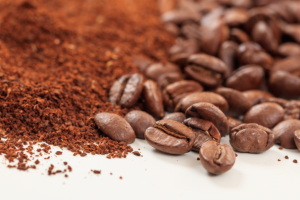
You can also tell good coffee by the appearance of the beans. High-quality beans are:

  • uniform in size and shape,
  • with no visible damage,
  • without any noticeable scorched, white, or black spots,
  • with a light, natural oiliness (but not shiny or overly greasy, which would indicate that they were roasted too dark).

On the other hand, the following are often found in low-quality coffee:

  • broken and split beans,
  • beans with holes or insect damage,
  • a mix of beans of various sizes,
  • very dark, black beans (burnt).

This mixture of beans indicates lower-quality beans and inadequate quality control. High-end producers carefully remove these defects through manual or mechanical sorting. In the case of cheap coffee, sorting is minimal or nonexistent.

3. Aroma

When you open the package, good coffee always smells fresh and rich. You can detect the following notes in the aroma:

  • nuts,
  • cocoa,
  • caramel,
  • fruits,
  • flowers.

The aroma comes from hundreds of natural aromatic compounds that are formed during the processing and roasting of coffee.
If the coffee smells:

  • dull,
  • damp,
  • burned,
  • or doesn't smell at all,

it is not fresh or has begun to oxidize. The aroma is the first indicator of the bean's quality and storage conditions.
The aroma is the first indicator that reveals true quality.

4. Purity and balance of flavor

The flavor should be clean, without any bitterness that “burns” and without any acidity that creates an unpleasant sharpness.

Good coffee has a clean, distinct flavor. The flavor features:

  • a light dessert,
  • a pleasant tartness,
  • a mild bitterness,
  • specific nuances (nuts, citrus fruits, cocoa, berries).

Bad coffee has:

  • a burnt aftertaste,
  • a musty or earthy taste,
  • a sharp or sour sensation,
  • a metallic aftertaste.

6. Storage, Transportation, and Packaging

Good coffee is packaged with:

  • a one-way ventilation valve,
  • a resealable bag,
  • a high-quality locking system.

This type of packaging allows the beans to release CO₂ but does not let air in. Poor-quality coffee is often packaged in simple bags without ventilation, which promotes oxidation.

Coffee is sensitive to moisture, air, and temperature. High-quality beans are:

  • dried properly,
  • stored in sealed bags with a protective layer,
  • transported in dry, controlled environments,
  • packaged in airtight containers.

Cheap coffee is often transported in ordinary bags, which absorb moisture and cause the coffee to spoil before it even reaches the store.

7. Certification and Quality Standards

Certifications are not mandatory, but they indicate a higher level of quality control:

  • Fairtrade - ensures fair conditions for farmers,
  • Organic/Bio - grown without pesticides,
  • Rainforest Alliance - sustainable agriculture,
  • Single Origin – beans from a single region with a distinct flavor profile.


Although the absence of a certificate does not necessarily indicate low quality, its presence is a sign of the manufacturer's commitment to quality.

8. Why Good Coffee Isn't Cheap

Many people think that coffee is a simple product, but in reality, growing high-quality coffee is time-consuming and not cheap. Here are the main reasons why good coffee costs more.

1. Only ripe coffee cherries are harvested
Good coffee is harvested by hand, selecting only the red, fully ripe berries. This requires more work and time.

Cheap coffee is often harvested by machine-all the berries, including the damaged and unripe ones.

2. A large portion of the beans are discarded
To produce high-quality beans, growers:

  • sort,
  • checks,
  • removes the damaged beans.

This can account for as much as 20–30% of the total volume. Cheap coffee isn't sorted—it's all ground up and sold.

3. Growing conditions are challenging
Coffee grows at a specific temperature and altitude. To get a good harvest, you need:

  • mountain climate,
  • special soil,
  • regular maintenance work,
  • protection against diseases.

Arabica coffee is very sensitive, so crop losses are common-which drives up the price.

4. Fair compensation for farmers
Some high-quality coffee comes from small farms where the following are ensured:

  • fair pay,
  • better working conditions,
  • sustainable methods.

This increases the cost of coffee, but ensures a high-quality product and supports local communities.

5. Certificates and Oversight
Organic, fair trade, sustainability, and other labels mean:

  • additional checks,
  • regular inspections,
  • strict standards.

This increases costs, but ensures a better product.

Enjoy a cup of high-quality coffee here arabikakfija.lv!

Kafijas ievārījums

Coffee Jam

Coffee jam is an amazing recipe that transforms the intense aroma of espresso into a sweet, fragrant, and creamy spread. It’s not difficult to make, you only need a few ingredients

Vairāk... »